Bo Thao-Urabe and Dennis Urabe: Community, Connection, and Commitment
Nov 3, 2025
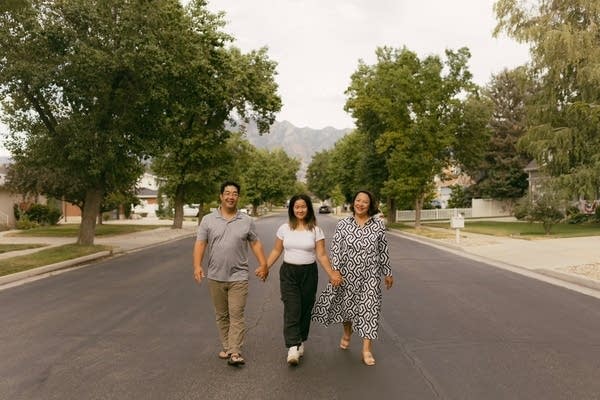
The themes of community and connection run deep in the lives and stories of Bo Thao-Urabe and Dennis Urabe. They’ve made a commitment to a leadership gift to MPR’s comprehensive capital campaign.
Because the Hmong language is oral, listening is a core part of the Hmong culture. Bo shared, “When my family moved to this country, my parents were sending cassettes back to the homeland, because that's how they sent letters. They didn't write. Eventually we had Hmong Radio, so that became a really important way for the community to communicate with each other. I didn't discover public radio until I was in college. For me, listening to the news is culturally familiar.”
At the end of the Vietnam war, Bo’s family fled Laos and went to a Thai refugee camp where they lived for three years. The family came to Chicago in 1979 as refugees. After a few years there, they moved to Wisconsin so they could farm. Later they moved to the East Side of St. Paul where for the first time Bo was in school with a large number of Hmong students.
In 2004, Bo moved back to Minnesota after living in Washington, DC for four years where she ran Hmong National Development Inc., a national capacity building and advocacy nonprofit. Dennis was working on contract with St. Paul Companies (now Travelers). They met at a birthday party and started a conversation. The rest followed.
Dennis shared, “It wasn't until I started dating Bo that I became a public radio listener. Bo would drive my car. When I got in my car, it was tuned to public radio. I always found the content interesting. I’ve been a firm believer that the source of your news is very important.”
Dennis Urabe’s grandfather served as a diplomat. After his grandparents returned to Japan, Dennis’ father came back to the United States so he could attend university here. His father and mother eventually settled in Salt Lake City, Utah, where Dennis and his siblings were born. Dennis’ mother, who recently turned 80, now owns and runs a Japanese grocery store in Salt Lake City. “Running the grocery store is her way to be and feel connected with the community every day,” said Dennis. “When we visit other parts of the world, like Laos and Vietnam, we watch BBC. Even in these communist countries, they air BBC. It’s great to see a source that is a reliable and consistent news outlet. It creates a connection to the world.” MPR|APM is the sole distributor of the BBC in the U.S.
Bo joined the MPR|APM board in 2023. “I thought about the way I want to spend my time. My work is grassroots, building social justice and community-centered solutions in a democracy. I believe MPR is one key infrastructure of democracy.”
Bo added, “Public media truly is a public good. It's the only media source that is completely free to the public. You don't have to subscribe to receive the news, music, or stories. It’s made up of a lot of little stations, across the country. It’s local radio that tells local stories that we then share across our state and our country.
“Being part of MPR in this way—co-chairing the campaign and making it one of our family’s largest gifts—is important to our family. I want to ensure that MPR and public media are around for many more generations so my 14-year-old daughter can have access to it years from now. That’s why I’m doing my small part to create longevity for this essential resource.”
There is urgency to Bo’s message. “With the loss of federal support, it’s even more important that we protect MPR|APM’s ability to be here for all Americans. Everyone here at MPR and everyone who listens and supports us are part of that solution.”
Dennis added, “Bo is the philanthropist in the family. She wants our daughter to think that philanthropy is commonplace. She’ll grow up and carry on the belief that she can make a difference.”